




Uterine fibroids are non-cancerous growths in the uterus that can lead to heavy menstrual bleeding, pelvic pain, bloating, and fertility challenges. Treatment in Lucknow offers a range of options, from medical management to minimally invasive procedures like uterine artery embolization, as well as surgical solutions such as myomectomy or hysterectomy. Early diagnosis and personalized care help relieve symptoms, preserve reproductive health, and improve overall quality of life, providing safe and effective solutions for women affected by fibroids.
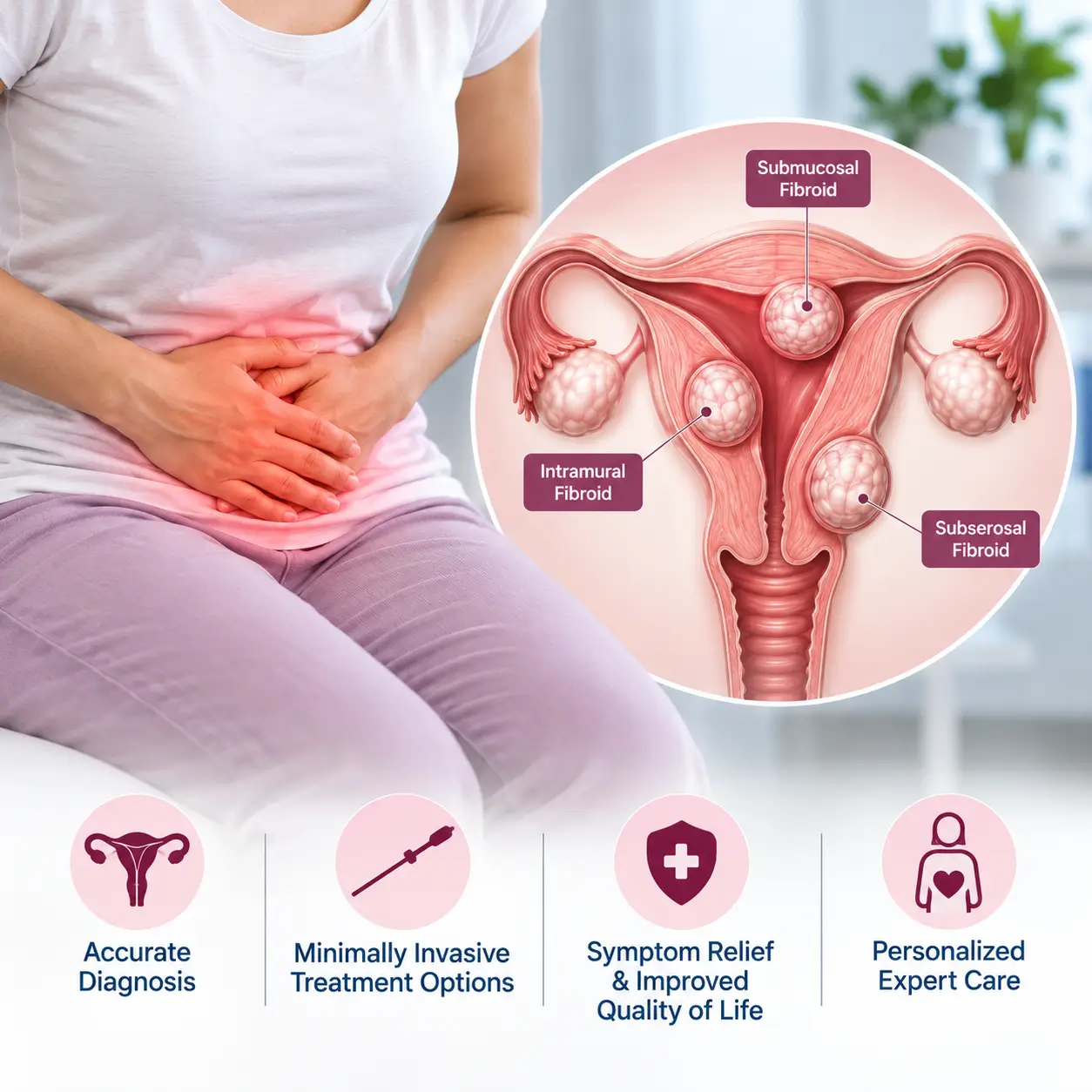
Uterine fibroids are noncancerous growths in the uterus that can cause heavy menstrual bleeding, pelvic pain, or fertility issues. Treatment depends on symptoms, fibroid size, and a woman’s reproductive goals.
Watchful waiting: For small, symptom-free fibroids, regular monitoring may be sufficient.
Medical therapy: Hormonal treatments (oral contraceptives, GnRH agonists, progesterone modulators) can reduce bleeding and shrink fibroids temporarily. Pain medications and other supportive drugs help manage symptoms.
Minimally invasive procedures: Uterine artery embolization or MRI-guided focused ultrasound can reduce fibroid size without major surgery.
Surgical options: Myomectomy removes fibroids while preserving fertility, whereas hysterectomy provides a permanent solution.
Treatment should be personalized, focusing on symptom relief, fertility preservation, and overall quality of life.
Modern uterine fibroid treatments include minimally invasive and medical approaches tailored to the size, location, symptoms, and individual needs of each patient. Available options may include:
A minimally invasive procedure that blocks the blood supply to fibroids, causing them to gradually shrink while preserving the uterus.
Focused ultrasound energy is used to heat and treat selected fibroid tissue without making a surgical incision. Suitability depends on the fibroid's size, location, and other factors.
Radiofrequency energy is delivered directly into selected fibroid tissue to heat and destroy targeted areas, allowing the treated fibroid to gradually reduce in size.
A surgical procedure that removes fibroids while preserving the uterus. It may be considered depending on the number, size, and location of the fibroids and the patient's individual goals.
Medications may be used to help manage symptoms such as heavy menstrual bleeding or pelvic discomfort. The appropriate medication depends on the patient's symptoms and medical history.
The doctor evaluates symptoms and may perform a pelvic examination to check for uterine enlargement, tenderness, or other changes that may be associated with fibroids.
Ultrasound provides detailed images of the uterus and helps identify the size, number, and location of fibroids. It is commonly used as an initial imaging test for suspected uterine fibroids.
MRI can provide more detailed images of the uterus and surrounding tissues. It may be recommended when additional information about the size, location, or characteristics of fibroids is needed for treatment planning.
The doctor evaluates symptoms such as heavy or prolonged menstrual bleeding, pelvic pressure, abdominal discomfort, frequent urination, or pain. The severity and impact of these symptoms help guide further evaluation.
Blood tests may be recommended when heavy menstrual bleeding is present to check for anemia and assess other relevant health factors.
Depending on the patient's symptoms and findings, additional tests such as hysteroscopy or other imaging may be recommended to evaluate fibroids that affect the uterine cavity and to support an appropriate treatment plan.
Hear from patients who have experienced the care of Dr. Gaurav Chauhan. Discover their experiences with minimally invasive treatments, personalized guidance, and a patient-first approach focused on safety, comfort, and better recovery.
One of the finest Interventional radiologist i have seen. Wonderful Human being. And most important thing he is Great doctor.
Explore educational videos and expert insights from Dr. Gaurav Chauhan, covering conditions, treatment options, and advances in minimally invasive interventional radiology. His videos help patients understand their condition, available treatments, and what to expect from modern image-guided care.
A glimpse into Dr. Gaurav Chauhan’s journey through seminars, conferences, academic presentations, and professional events reflecting his commitment to innovation, learning, and excellence in interventional radiology.
Experience advanced interventional radiology care with Dr. Gaurav Chauhan, a leading Interventional Radiologist in Lucknow, known for precision-focused, minimally invasive treatments. With advanced training and extensive experience, he specializes in image-guided procedures that can treat complex conditions without the need for major surgery.
Dr. Gaurav Chauhan follows a patient-first approach, combining modern interventional techniques with personalized treatment planning. His focus is on minimizing discomfort, reducing scarring, enabling faster recovery, and helping patients return to their daily lives sooner.
His expertise covers a wide range of vascular and non-vascular conditions, offering patients minimally invasive alternatives where appropriate. From vascular interventions and embolization procedures to neurological and organ-specific treatments, each procedure is carefully planned using advanced imaging and precision-guided techniques.
With a focus on safety, accuracy, and patient comfort, Dr. Chauhan works closely with patients to understand their condition, explain available treatment options, and develop an individualized care plan. The goal is not simply to perform a procedure, but to provide the right treatment with the least possible physical impact.
Uterine fibroids are non-cancerous growths that develop in or around the uterus. They can vary in size, number, and location, and some women may have no symptoms.
Symptoms may include heavy or prolonged menstrual bleeding, pelvic pressure or pain, abdominal discomfort, frequent urination, constipation, or pain during sexual intercourse. Some women may not experience any symptoms.
Fibroids are commonly diagnosed using a pelvic ultrasound. Depending on the situation, an MRI or other diagnostic tests may be recommended to provide more detailed information about the size and location of the fibroids.
No. Small or asymptomatic fibroids may not require immediate treatment and can sometimes be monitored. Treatment is generally considered when fibroids cause significant symptoms, complications, or affect quality of life.
Uterine Artery Embolization is a minimally invasive procedure that reduces the blood supply to fibroids. This causes the fibroids to gradually shrink and can help improve symptoms such as heavy menstrual bleeding and pelvic pressure.
UAE is a minimally invasive, image-guided procedure rather than conventional open surgery. A catheter is used to deliver small embolic particles to the arteries supplying the fibroids.
Fibroids can sometimes affect fertility depending on their size and location, particularly when they distort the uterine cavity. If pregnancy is a consideration, treatment options should be discussed individually with the appropriate specialist.
Recovery varies depending on the treatment performed and the individual patient. Minimally invasive procedures generally involve a shorter recovery than major surgery, but your doctor will provide specific instructions based on your treatment and overall health.
Have questions about your condition or looking for a minimally invasive treatment option?
Connect with Dr. Gaurav Chauhan to discuss your symptoms, understand your diagnosis, and explore suitable image-guided treatment options. Each consultation is focused on understanding your individual needs and recommending the most appropriate approach for your condition.