
Brain stroke is a medical emergency that occurs when the blood supply to a part of the brain is interrupted or reduced, preventing brain tissue from getting essential oxygen and nutrients. If not treated quickly, this can lead to permanent neurological damage or disability. Lucknow has evolved into a hub for advanced stroke care, offering rapid diagnosis and state‑of‑the‑art treatments to improve outcomes and quality of life for patients.
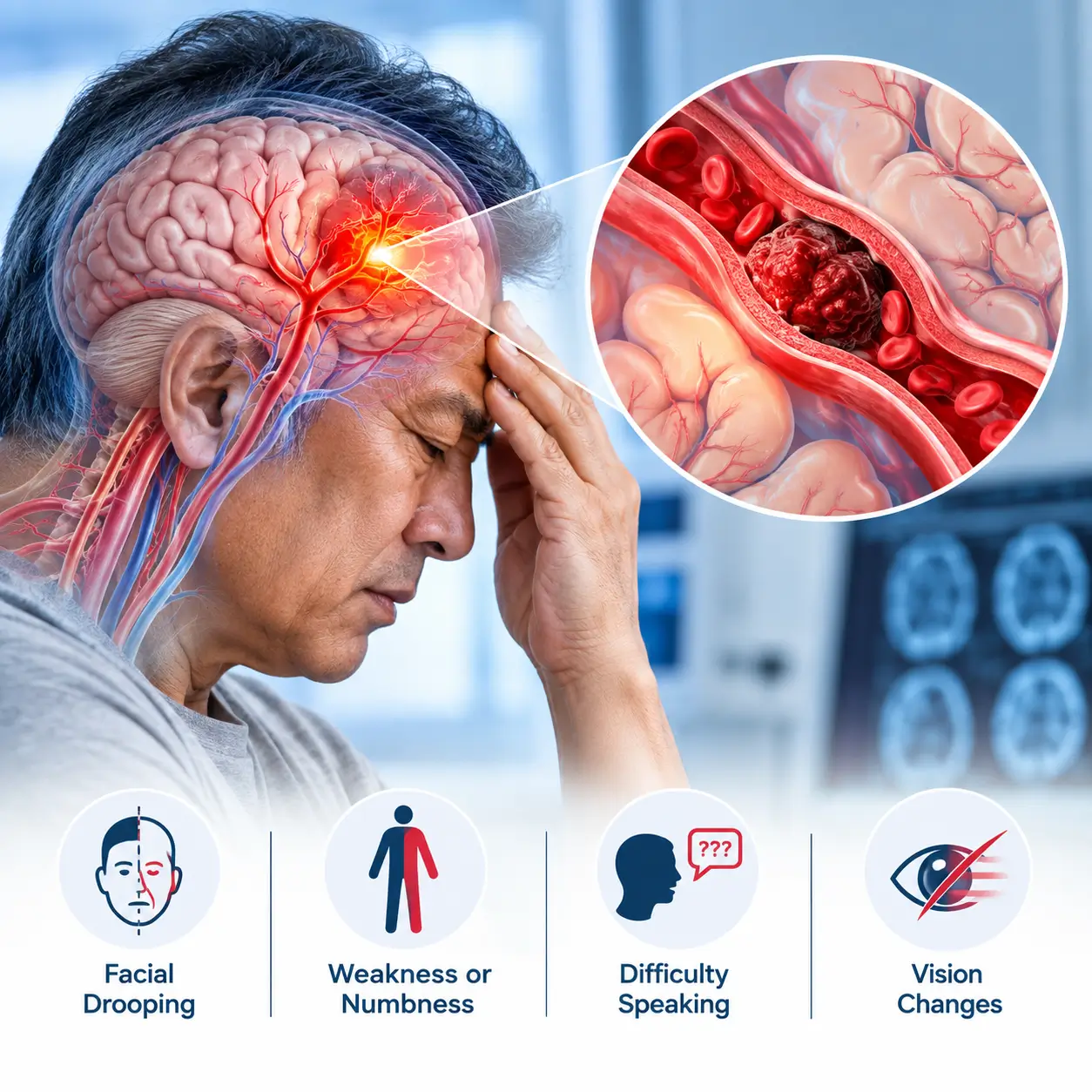
If you or someone around you may be experiencing a stroke, note the time the symptoms began. Some treatments are most effective when given soon after a stroke starts.
The window for effective stroke treatment is narrow — most therapies are most beneficial when administered within the first few hours of symptom onset. Early intervention reduces the risk of permanent damage and increases the chances of recovery. Healthcare providers in Lucknow emphasize rapid recognition of stroke symptoms such as sudden weakness on one side of the body, difficulty speaking, vision problems, or loss of balance — and immediate medical attention.
You may suddenly have difficulty speaking or understanding speech. Confusion, slurred words, or trouble forming sentences can be warning signs of a stroke.
Sudden numbness, weakness, or paralysis may occur, often on one side of the body. Try raising both arms above your head at the same time. If one arm drifts downward, it could indicate a stroke. One side of your mouth may also droop when attempting to smile.
Vision may suddenly become blurred, blackened, or double. These changes can happen in one or both eyes without warning.
A sudden, intense headache, sometimes accompanied by vomiting, dizziness, or altered consciousness, can be a sign of a stroke.
You may stumble, lose your balance, or experience sudden dizziness. Difficulty coordinating movements is also a common symptom.
The doctor evaluates symptoms such as weakness, numbness, facial drooping, speech difficulties, vision changes, coordination problems, and altered alertness to assess possible neurological impairment.
A CT scan of the brain is commonly performed urgently to identify bleeding in the brain and assess other abnormalities. It helps doctors determine the type of stroke and guide immediate treatment decisions.
An MRI provides detailed images of brain tissue and can help identify areas affected by an ischemic stroke, particularly when early or small areas of brain injury need further evaluation.
CT angiography can visualize the blood vessels supplying the brain and help identify a blocked or narrowed artery. It may assist in determining whether an endovascular treatment could be appropriate.
Perfusion imaging evaluates blood flow through different areas of the brain. In selected patients, it can provide additional information about brain tissue that may be at risk and help guide treatment planning.
In selected cases, catheter-based cerebral angiography provides detailed images of the brain's blood vessels. It may be used for diagnosis and, when appropriate, can also support endovascular treatment such as mechanical thrombectomy.
Hear from patients who have experienced the care of Dr. Gaurav Chauhan. Discover their experiences with minimally invasive treatments, personalized guidance, and a patient-first approach focused on safety, comfort, and better recovery.
One of the finest Interventional radiologist i have seen. Wonderful Human being. And most important thing he is Great doctor.
Explore educational videos and expert insights from Dr. Gaurav Chauhan, covering conditions, treatment options, and advances in minimally invasive interventional radiology. His videos help patients understand their condition, available treatments, and what to expect from modern image-guided care.
A glimpse into Dr. Gaurav Chauhan’s journey through seminars, conferences, academic presentations, and professional events reflecting his commitment to innovation, learning, and excellence in interventional radiology.
Experience advanced interventional radiology care with Dr. Gaurav Chauhan, a leading Interventional Radiologist in Lucknow, known for precision-focused, minimally invasive treatments. With advanced training and extensive experience, he specializes in image-guided procedures that can treat complex conditions without the need for major surgery.
Dr. Gaurav Chauhan follows a patient-first approach, combining modern interventional techniques with personalized treatment planning. His focus is on minimizing discomfort, reducing scarring, enabling faster recovery, and helping patients return to their daily lives sooner.
His expertise covers a wide range of vascular and non-vascular conditions, offering patients minimally invasive alternatives where appropriate. From vascular interventions and embolization procedures to neurological and organ-specific treatments, each procedure is carefully planned using advanced imaging and precision-guided techniques.
With a focus on safety, accuracy, and patient comfort, Dr. Chauhan works closely with patients to understand their condition, explain available treatment options, and develop an individualized care plan. The goal is not simply to perform a procedure, but to provide the right treatment with the least possible physical impact.
Warning signs can include sudden weakness or numbness, especially on one side of the body, facial drooping, difficulty speaking or understanding speech, sudden vision problems, dizziness or loss of balance, and sometimes a sudden severe headache.
Treat it as a medical emergency. Remember B.E. F.A.S.T. — Balance, Eyes, Face, Arms, Speech, Time. Call your local emergency medical service immediately and note the time when symptoms first appeared. Even if symptoms improve or disappear, urgent medical evaluation is still important.
Doctors may use a neurological examination along with brain imaging such as a CT scan or MRI. CT angiography and other imaging may also be used to examine blood vessels and help determine the type and cause of stroke.
In eligible patients, treatment may include clot-dissolving medication such as alteplase or tenecteplase. Some patients with a large-vessel blockage may also be candidates for mechanical thrombectomy, a catheter-based procedure that removes the clot. Treatment eligibility depends on factors such as stroke type, timing, imaging findings, and overall clinical condition.
Mechanical thrombectomy is a minimally invasive procedure used in selected patients with an acute ischemic stroke caused by a large blood clot. A catheter is guided through an artery to the blocked vessel, where specialized devices can remove the clot and restore blood flow.
Stroke is a time-sensitive medical emergency. The sooner appropriate treatment begins, the greater the opportunity to limit brain injury and reduce the risk of long-term disability.
After emergency treatment, care may include monitoring, treatment to reduce the risk of another stroke, and rehabilitation. Depending on the effects of the stroke, rehabilitation may involve physical, occupational, speech, or other forms of therapy.
Have questions about your condition or looking for a minimally invasive treatment option?
Connect with Dr. Gaurav Chauhan to discuss your symptoms, understand your diagnosis, and explore suitable image-guided treatment options. Each consultation is focused on understanding your individual needs and recommending the most appropriate approach for your condition.