Varicose veins are enlarged, twisted veins that often cause leg pain, heaviness, swelling, and discomfort. Left untreated, they can lead to complications like ulcers or blood clots. In Lucknow, advanced minimally invasive treatments are available, including endovenous laser therapy (EVLT), radiofrequency ablation (RFA), sclerotherapy, and phlebectomy. These procedures are safe, effective, and promote faster recovery with minimal pain. Early diagnosis and treatment improve circulation, relieve symptoms, and enhance the appearance of legs, ensuring long-term vein health.
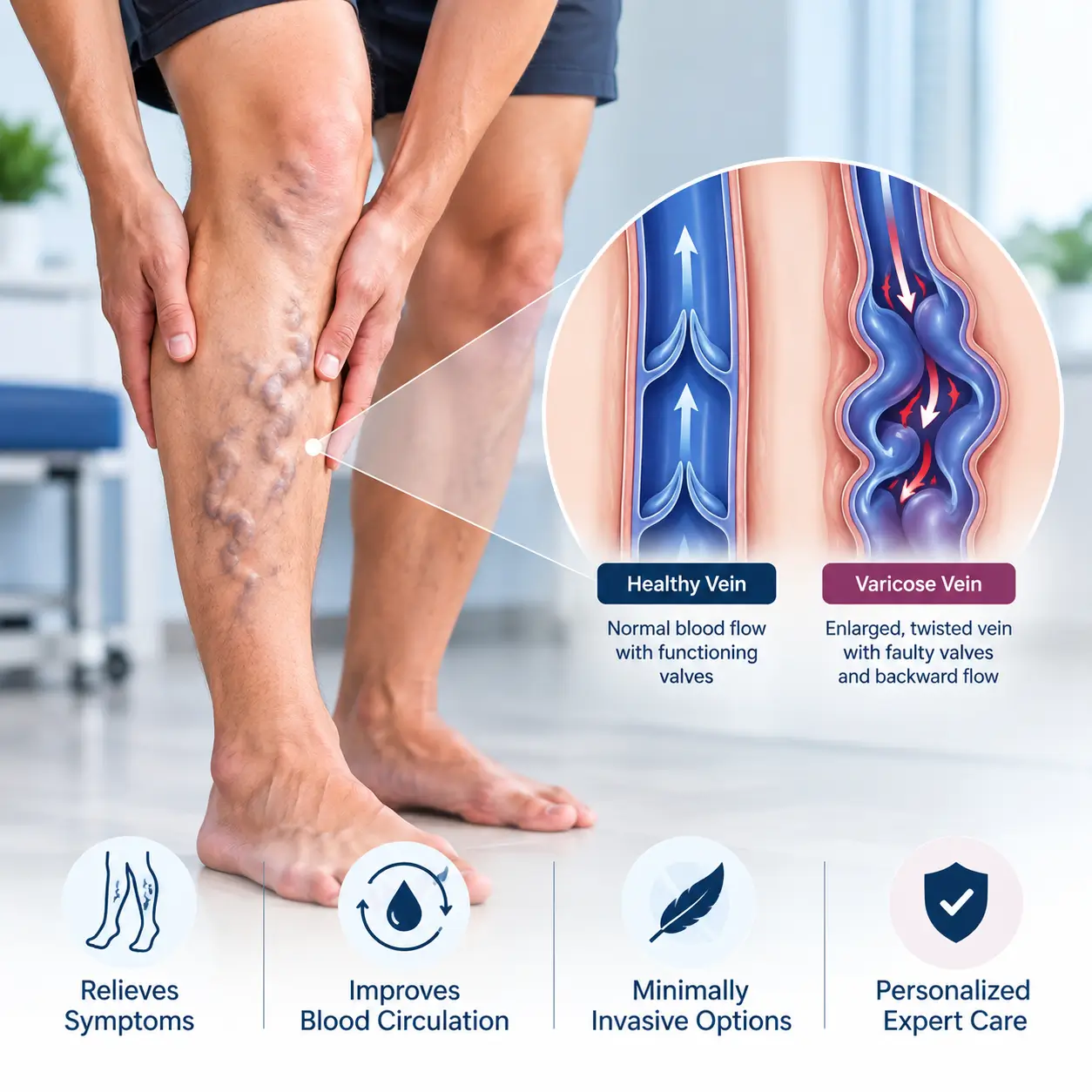
Several factors can contribute to the development of varicose veins.
Age: Vein elasticity decreases with age.
Gender: Women are more prone due to hormonal influences.
Pregnancy: Increased blood volume and pressure on veins can trigger varicose veins.
Obesity: Extra weight puts additional pressure on leg veins.
Sedentary lifestyle: Prolonged standing or sitting can impair blood flow.
Family history: Genetics may increase susceptibility.
Modern varicose vein treatments are minimally invasive, safe, and highly effective. Available therapies include.
A laser is used to close the affected vein from within, redirecting blood flow to healthy veins.
Similar to laser treatment, this technique uses radiofrequency energy to seal off faulty veins.
A medical solution is injected into smaller varicose or spider veins, causing them to collapse and fade.
Small incisions are made to remove bulging veins in a minimally invasive manner.
Medical-grade compression stockings can improve circulation and reduce discomfort in mild cases.
The doctor examines the legs for enlarged or twisted veins, swelling, skin changes, tenderness, and other visible signs. The examination may be performed while standing to better assess the veins.
A Doppler ultrasound provides detailed images of the leg veins and blood flow. It helps identify abnormal blood flow, blocked veins, and faulty valves associated with varicose veins.
The doctor evaluates symptoms such as aching, heaviness, swelling, itching, burning, or discomfort in the legs. The pattern and severity of symptoms help guide further evaluation and treatment planning.
Ultrasound can assess whether blood is flowing backward through weakened or faulty vein valves, a condition known as venous reflux. Identifying reflux helps determine the veins contributing to the problem.
Varicose veins can vary from small visible veins to larger, twisted veins accompanied by swelling or skin changes. Clinical assessment helps determine the severity and appropriate management approach.
In selected cases, additional imaging may be recommended to evaluate deeper veins or investigate complex vascular conditions. The choice of imaging depends on the patient's symptoms and Doppler findings.
Hear from patients who have experienced the care of Dr. Gaurav Chauhan. Discover their experiences with minimally invasive treatments, personalized guidance, and a patient-first approach focused on safety, comfort, and better recovery.
One of the finest Interventional radiologist i have seen. Wonderful Human being. And most important thing he is Great doctor.
Explore educational videos and expert insights from Dr. Gaurav Chauhan, covering conditions, treatment options, and advances in minimally invasive interventional radiology. His videos help patients understand their condition, available treatments, and what to expect from modern image-guided care.
A glimpse into Dr. Gaurav Chauhan’s journey through seminars, conferences, academic presentations, and professional events reflecting his commitment to innovation, learning, and excellence in interventional radiology.
Experience advanced interventional radiology care with Dr. Gaurav Chauhan, a leading Interventional Radiologist in Lucknow, known for precision-focused, minimally invasive treatments. With advanced training and extensive experience, he specializes in image-guided procedures that can treat complex conditions without the need for major surgery.
Dr. Gaurav Chauhan follows a patient-first approach, combining modern interventional techniques with personalized treatment planning. His focus is on minimizing discomfort, reducing scarring, enabling faster recovery, and helping patients return to their daily lives sooner.
His expertise covers a wide range of vascular and non-vascular conditions, offering patients minimally invasive alternatives where appropriate. From vascular interventions and embolization procedures to neurological and organ-specific treatments, each procedure is carefully planned using advanced imaging and precision-guided techniques.
With a focus on safety, accuracy, and patient comfort, Dr. Chauhan works closely with patients to understand their condition, explain available treatment options, and develop an individualized care plan. The goal is not simply to perform a procedure, but to provide the right treatment with the least possible physical impact.
Clear answers to common questions about thyroid nodules, minimally invasive treatments, Radiofrequency Ablation (RFA), and what to expect during your treatment journey.
A thyroid nodule is a lump or abnormal growth that develops within the thyroid gland. Most thyroid nodules are benign, but proper evaluation is important to determine the appropriate treatment.
No. Many thyroid nodules can be monitored or treated without conventional surgery, depending on their size, symptoms, ultrasound characteristics, and medical evaluation. Suitable benign nodules may be considered for minimally invasive treatments such as Radiofrequency Ablation (RFA).
RFA is a minimally invasive procedure that uses controlled radiofrequency energy to heat and gradually reduce the volume of a selected thyroid nodule. The procedure is performed under ultrasound guidance.
No. RFA is generally considered only for appropriately selected nodules after detailed clinical and imaging evaluation. Your doctor may recommend additional tests, including biopsy, before deciding whether RFA is appropriate.
RFA is performed using a thin needle-like electrode rather than a conventional surgical incision. As a result, it generally does not leave the type of visible neck scar associated with open thyroid surgery.
The procedure time can vary depending on the size, number, and location of the nodule. Your doctor will explain the expected duration and preparation requirements during your consultation.
Most patients can return to their normal activities according to their doctor's advice. Follow-up ultrasound examinations are usually used to monitor the treated nodule and assess its response over time.
The first step is a consultation and detailed evaluation. Depending on your condition, this may include a thyroid ultrasound, blood tests, and/or biopsy. Dr. Gaurav Chauhan can then discuss the appropriate treatment options based on your individual case.
Have questions about your condition or looking for a minimally invasive treatment option?
Connect with Dr. Gaurav Chauhan to discuss your symptoms, understand your diagnosis, and explore suitable image-guided treatment options. Each consultation is focused on understanding your individual needs and recommending the most appropriate approach for your condition.